
Pink Salt Block
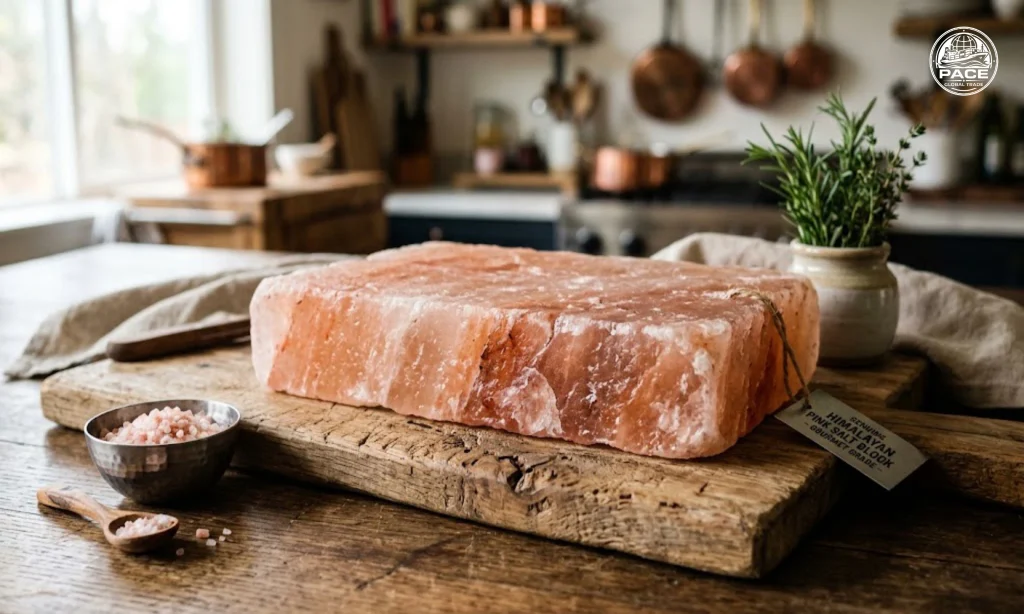
You might have seen those pink salt block posts on social media. The block is usually a thick, rosy slab, and it often looks almost too nice to use. Still, that look is part of the appeal. We kept one on our counter for a while. At first, we used it one time just because it was new. Over time, it turned into something we actually grab. We use it when we cook scallops and when we chill fruit for a summer party.
Here’s what we figured out about what a pink salt block really is, how it works, and why so many people keep it in their kitchen, including us.
What Exactly Is a Pink Salt Block?
At its core, a pink salt block is a solid, hand-cut slab of Himalayan salt pulled from ancient deposits in the Punjab region of Pakistan. That signature pink color isn’t dye or coating — it comes from trace minerals, mainly iron oxide, that got locked into the salt millions of years ago. Table salt goes through processing and refining; this doesn’t. It’s cut straight out of the mineral deposit and shaped into slabs, typically somewhere between three-quarters of an inch and two inches thick.
The origin story is neat, sure. But what really hooked us was what you can actually do with the thing once it’s on your stove.
How Himalayan Salt Block Cooking Works?
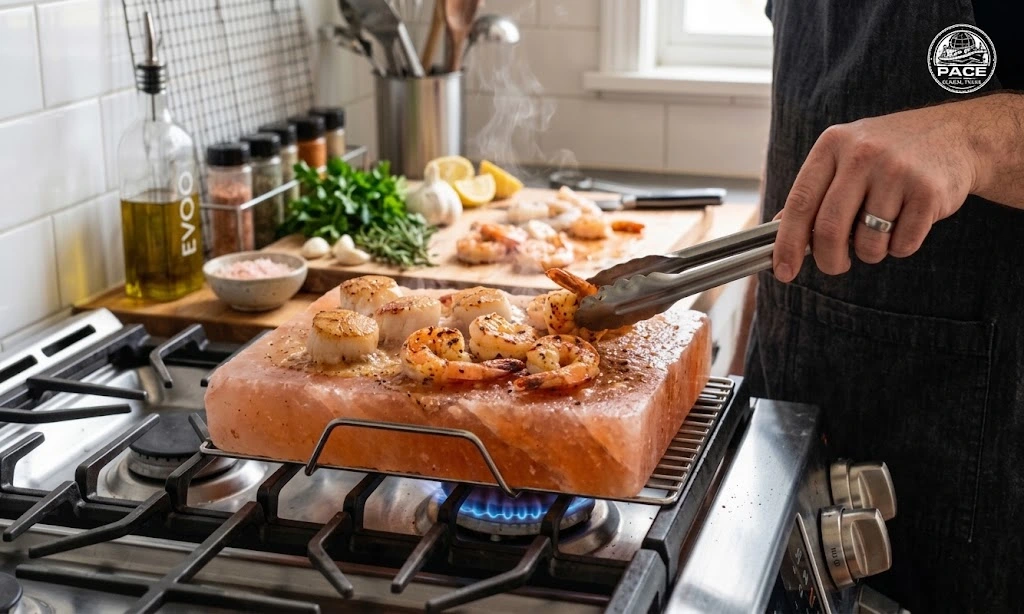
The concept behind himalayan salt block cooking is honestly pretty simple once you break it down: salt holds and conducts heat exceptionally well. Set the block on a burner, a grill, or in the oven, and it soaks up heat slowly, then holds onto it far longer than a regular metal pan would. Once it’s properly hot, you can sear thin cuts of meat, cook shrimp, or crisp up vegetables right on the surface — and the salt seasons everything as it goes.
That’s a different experience than just salting your food beforehand. With a himalayan cooking salt block, the seasoning works its way in from the surface, so you end up with a light, even salinity without dumping in extra salt.
Hot Cooking vs. Cold Serving
One thing that genuinely caught us off guard the first time we used ours: how well these blocks handle both extremes of temperature. A salt cooking block isn’t just for searing and grilling. Because the slab holds cold as effectively as it holds heat, you can pop it in the fridge or freezer for a few hours, then bring it out as a serving platter for sushi, cured meats, a cheese board, or even scoops of ice cream that hold their shape longer than they would on a regular plate.
That back-and-forth versatility is a big reason cooking on a block of salt has caught on for dinner parties. You get a working cooking surface and a striking presentation piece, and it’s the same object doing both jobs.
Getting Started: Heating and Seasoning the Block
Before diving into cooking on himalayan salt for the first time, patience really does matter here. These blocks need a slow, gradual heat-up — not a straight shot onto high flame. Jump the temperature too fast and you risk cracking the salt. Most people start low and step the heat up gradually over fifteen to twenty minutes. Once it hits a stable, consistent temperature, it’s ready for thin steak slices, fish fillets, even eggs.
In our experience, thinner cuts of protein are the way to go, since a fully heated block cooks fast. Shrimp, for instance, can go from raw to fully cooked in under two minutes once the slab is at temperature.
Popular Ways of Using Himalayan Salt in Cooking
There’s a lot more to using himalayan salt in cooking than the classic sear. A few methods we’ve tried and would genuinely recommend:
Searing proteins – thin steaks, scallops, and shrimp pick up a light crust along with a subtle, mineral-rich seasoning.
Serving cold appetizers – a chilled block works beautifully under sashimi, deli meats, or a fruit spread.
Baking flatbreads – a heated block crisps thin dough almost like a pizza stone, with a built-in hint of salt.
Grating fresh seasoning – some cooks shave a little salt off an unused corner of the block to use as a finishing touch.
Each of these leans into a different strength of himalayan salt cooking, and once the basics click, it’s easy to start improvising your own version.
Caring for Your Block
One thing worth knowing upfront: a pink salt block isn’t something you scrub with dish soap. It’s a mineral, not a coated pan, so the care routine looks different. Let it cool all the way down after each use, then wipe it with a damp cloth — don’t soak it. Prolonged exposure to water can soften or start dissolving the surface over time. Keep it somewhere dry between uses, and it’ll hold up for years of regular cooking.
Why So Many Cooks Switching Over?
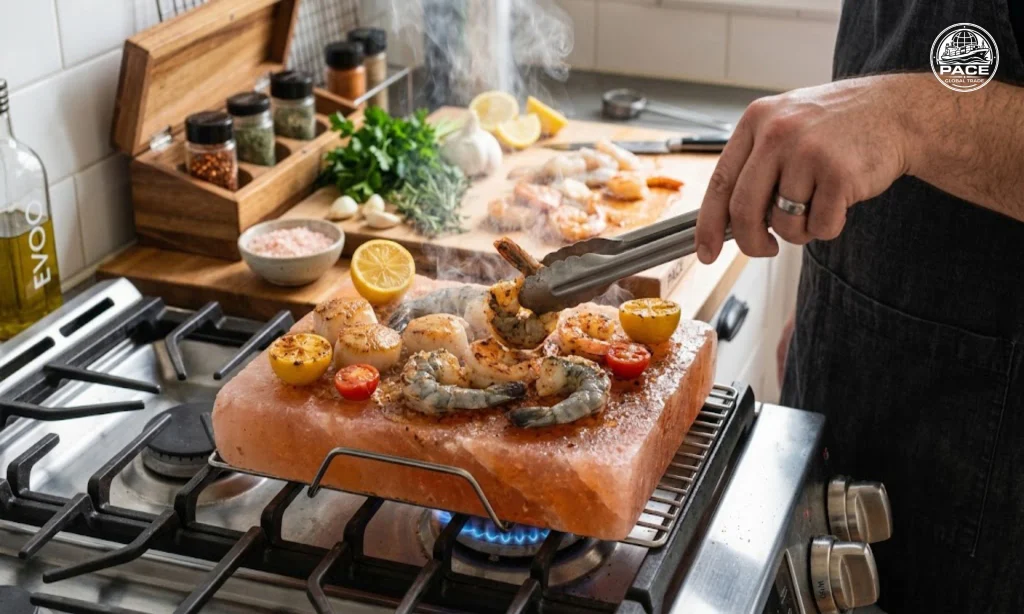
A big part of the appeal of cooking with a himalayan salt block is how much flavor and texture it adds without much effort on your end. No seasoning blend to mix up, no marinade needed for that subtle salty crust, no extra pan to find room for in the cabinet. It’s one slab doing the work of a grill, a chilled serving tray, and a seasoning source at the same time.
And there’s the visual side of it too. Setting food out on a naturally pink, almost glowing slab turns even an ordinary weeknight dinner into something that feels a bit special — ours has become a reliable conversation starter whenever people come over.
FAQ’s
Conclusion
On a busy weeknight, or when you just happened to whip up a cold starter for your friends, a pink salt block will help both. It will look pretty on the serving table. Plus, it can even be used in the pan itself. The block does require to be heated properly, making sure that you keep an eye on it as it heats. When it’s hot, you can’t simply leave it be. You still have to store it properly so that it lasts the long term.
The reward is worth it, though. A slight salty taste is imparted to whatever it’s cooking. And since you can use the same block to serve, you don’t have to do anything extra to accommodate it. Once you’ve used it just once, you’ll understand why so many people keep one handy.
Visit contact us page for inquiries.