Bath Salts
People have been soaking in mineral-rich water for a very long time — way before anyone slapped the label “self-care” on it. Ancient cultures built entire rituals around natural salted springs, convinced that a good soak could ease aching joints, calm angry skin, and generally put a person back in balance. That instinct never really went away. It just moved indoors, into a jar you can pick up at the store: bath salt.
If you’ve never really thought about what’s in that jar, or you already own five different tins of the stuff and want to actually use them right, this guide covers the basics — what bath salt is, the main types you’ll run into, why people swear by it, and how to actually get something out of your next soak instead of just tossing a handful in and hoping for the best.
So What Actually Is Bath Salt?
So what exactly are we talking about here? Bath salts are basically a mineral compound derived from evaporated seawater, ancient underground deposits, or mined rock salt. This is not the same stuff you might want to sprinkle over fries at dinner time—table salt has been heavily processed, stripping away many of the trace minerals found in the ocean. By contrast, bath salt is left closer to its natural state, allowing minerals such as magnesium, potassium, calcium, and others to stay intact where they can supposedly provide some sort of beneficial effect on the skin during soaking.
Some brands include things like essential oils, dried flowers, and/or plant extracts, but those aren’t necessary to make it work. Ultimately, it’s still going to be a basic dissolution of this material in water before hopping inside. Just make sure the water isn’t too cold—it should be warm to start with. After that? All you have to do is sit back and relax. Or, more accurately, all you have to do is let the minerals do their thing (it’s actually kind of fascinating) while doing absolutely nothing else.
The Main Types of Bath Salt Worth Knowing
Walk down the bath aisle and you’ll notice pretty quickly that not all salts are the same. Here’s the rundown.
Sea Salt Bath
This is a classic. A sea salt bath uses salt that’s harvested straight from ocean water and left to evaporate, so it keeps a pretty wide mineral profile — magnesium, potassium, the usual suspects — that people tend to associate with softer skin and looser muscles once they climb out of the tub. It’s usually where people start when they’re curious about mineral bathing, mostly because it’s cheap, it’s everywhere, and there’s no learning curve.
Himalayan Bath Salt
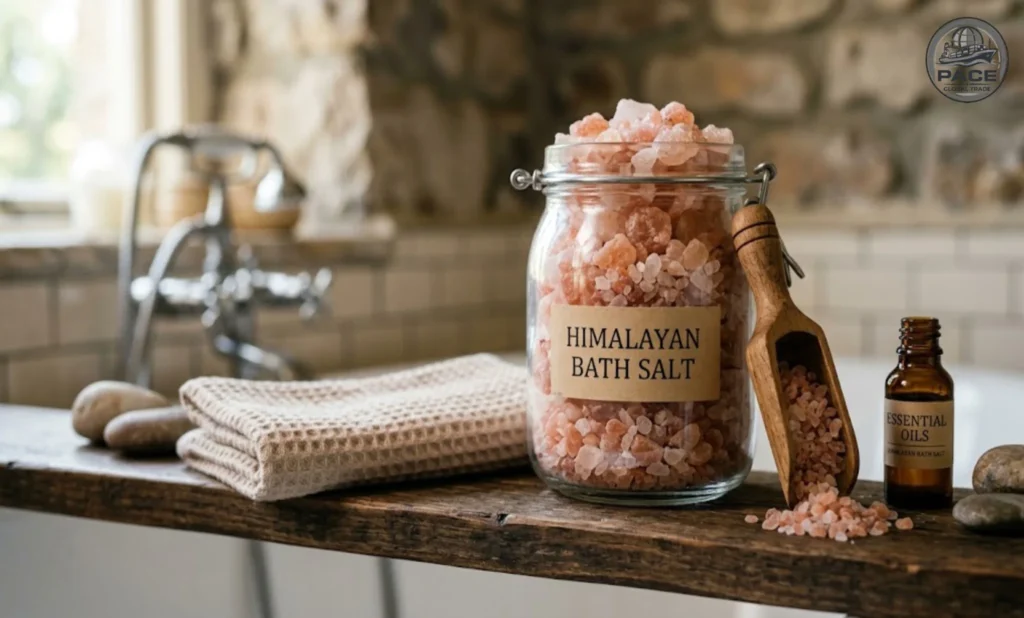
Himalayan bath salt is mined from ancient salt deposits, most of it coming out of the Punjab region of Pakistan, and it’s instantly recognizable by that pink tint, which comes from trace iron oxide. A Himalayan sea salt bath gets marketed as one of the “purest” mineral soaks out there, and there’s something to that argument — the salt has been sitting untouched for millions of years, well before modern pollution existed. People who like this one usually like the story behind it as much as the soak itself. There’s something appealing about bathing in something that old.
Epsom-Style and Mineral Blends
Technically Epsom salt is a different chemical compound (magnesium sulfate, not sodium chloride), but nobody really separates it out in conversation — it gets lumped in with the rest of the bath minerals because you use it exactly the same way. These days a lot of products just combine Epsom salt with sea salt or Himalayan salt in one bag, trying to get the benefits of a few different mineral sources without you having to buy three separate jars.
Luxury and Spa-Style Blends
Then there’s the fancier end of the shelf: luxury bath salts loaded up with essential oils, dried botanicals, milk powders, sometimes even exfoliating bits mixed in. These are built to feel like an event, not a chore — closer to what you’d get at an actual spa than what you’d grab in a rush at the pharmacy. If you’ve ever had a treatment somewhere that used spa salts and thought, “I wish I could just do this at home,” this is the category you want.
Why People Actually Bother With Bath Salt
Sore Muscles and Achy Joints
A big reason people reach for bath salts for muscle pain comes down to a simple combo: warm water plus minerals. Warm water on its own gets blood flowing and loosens up tight muscles, and plenty of people find that tossing in a mineral-rich salt makes the whole thing feel more effective — whether it’s post-workout soreness, sore feet after a long shift, or just the general tension that builds up in your shoulders by Friday.
Softer Skin
Both sea salt and Himalayan salt get credit for leaving skin feeling smoother after a soak. Some people take it a step further and use a coarser bath salt as a salt for body scrub, rubbing it gently over damp skin before rinsing off — great for the rough patches that build up on elbows, knees, and heels over time.
Actual Relaxation
There’s a reason relaxing bath salts get marketed exactly the way they do. Half the benefit is the ritual itself — running the water, adding the salt, maybe lighting a candle or putting on something quiet. Add in what warm water already does for your nervous system, and a mineral soak becomes a genuinely solid way to decompress, separate from whatever the salt is technically doing on a chemical level.
Making an Ordinary Bath Feel Like Something More
Not every soak has to be solving a problem. Sometimes it’s just about slowing down for twenty minutes. That’s where spa salts or a proper luxury blend come in — they turn a routine bath into something a little more deliberate, the kind of small habit that makes an otherwise unremarkable Tuesday night feel a bit more like a reset.
How to Actually Use Bath Salt (Without Wasting It)
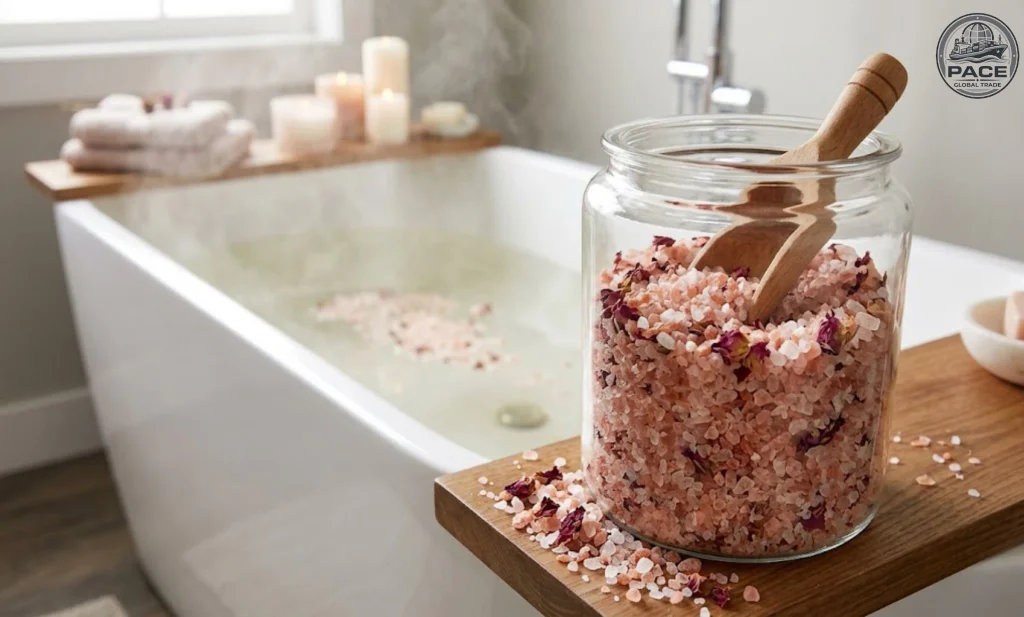
None of this is complicated, but a few small habits make a real difference in how much you get out of it.
Start with warm water, not scalding. It’s tempting to crank the heat, but water that’s too hot dries out and irritates skin, which kind of defeats the purpose if softer skin is what you’re after.
Add the salt while the tub is still filling. It dissolves more evenly that way, instead of sitting in a clump at the bottom while you wait around.
Don’t overdo the amount. A cup or so of sea salt bath crystals is plenty for a standard tub. If you’re using luxury bath salts with concentrated oils, you’ll usually want less — check the label.
Give it 15 to 20 minutes. Long enough for the warmth and minerals to actually do something, short enough that you don’t end up pruney or, for some people, a little dried out.
Rinse off afterward if there’s oil in the mix. Some of the richer luxury bath salts leave a light film that feels great in the tub but turns your shower floor into a hazard. A quick lukewarm rinse solves that.
Moisturize once you’re out. Warm water and salt can pull moisture from your skin depending on your skin type, so a lotion afterward helps lock in whatever softness you just soaked in for.
Which One Should You Actually Buy?
If you’re just testing the waters (sorry), a plain sea salt bath is the easiest, cheapest way to see if this is even your thing. Want something that feels a bit more special and naturally sourced? Himalayan bath salt is worth trying, especially if you like the look of those pink crystals as much as the soak itself. Dealing with sore muscles from the gym or a physical job? Look specifically for something labeled bath salts for muscle pain — these tend to lean heavier on magnesium. And if what you’re really chasing is a full sensory escape, grab a jar of luxury bath salts or spa salts, ideally with lavender, eucalyptus, or citrus oils mixed in, and turn your bathroom into something closer to a retreat for half an hour.
A Few Things Worth Knowing Before You Soak
Bath salt is safe for most people, but there are a few situations worth being careful about:
If you deal with eczema, psoriasis, or another skin condition, patch-test any new blend first, or run it by a dermatologist — concentrated salt water can be irritating for sensitive skin.
Got a cut or open wound? Wait until it heals. Salt water and broken skin do not get along.
If you’re pregnant or managing something like high blood pressure, check with your doctor before making hot mineral baths a regular habit, since prolonged heat can affect circulation.
And a practical one: oil-based luxury bath salts can leave your tub slippery. A quick rinse after you drain the water keeps the next person (or future you) from slipping.
Bottom Line
Bath salts can be as simple as a handful of sea salt to run through your tap water — but if you’re craving more than basic, I’ve got a great list of my favorite bath salts here (both basic and spa-style). Whether you need help relieving sore muscles or are simply looking for a great salt for your next body scrub, there’s some mix of these amazing bath minerals that will work wonders on your tired body.
When picking a bath mineral, start with a few basic ones and see what works best for your body! Then, once you feel comfortable experimenting with various types, go ahead and create your very own spa ritual — a practice humans have used for literally thousands of years!