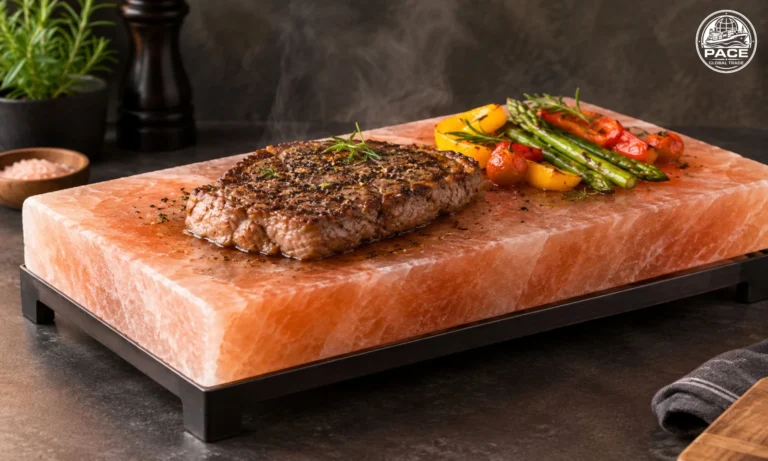
Animal Salt
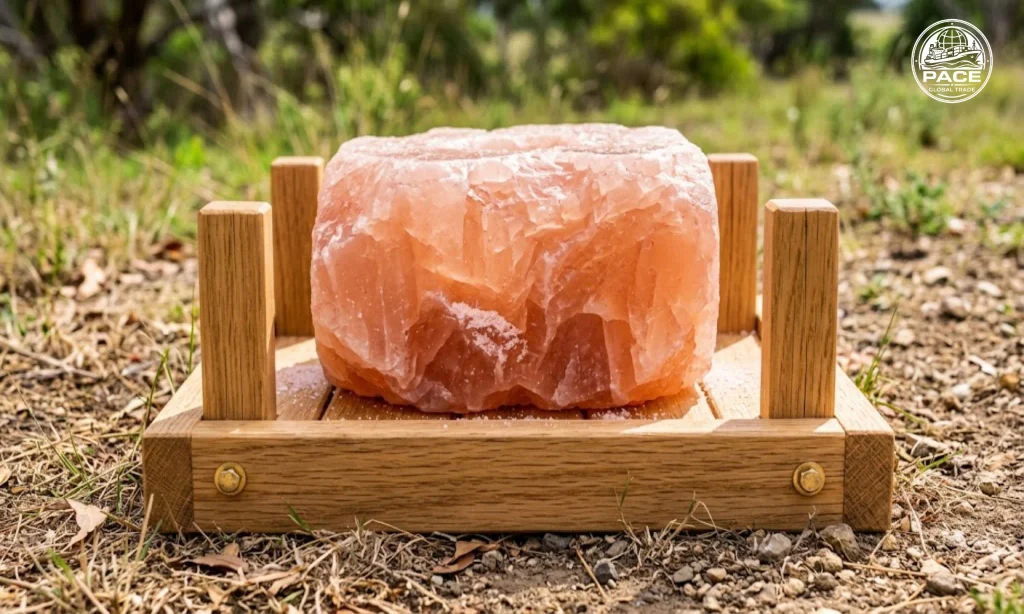
Animal salt is salt that people make for livestock and horses. It is sold as small loose grains. It is also sold as a hard block that animals chew or lick. In both forms, it provides sodium and chloride. These are key parts of a normal ration. If you work as a distributor, run a feed mill, or sell supplies on a farm store shelf, you have likely sold it more than once. Most buyers reorder without much trouble. Still, what catches some people off guard is the large spread in quality from one supplier to the next.
In this piece, we will cover what animals need, how the main types of animal salt vary, and what to check before you buy a large amount.
What is animal salt?
Most animal salt starts life as mined rock salt or evaporated salt. From there, it’s processed into one of three forms: coarse loose salt, fine loose salt, or compressed blocks. Some blocks are plain sodium chloride and nothing else.
Others have trace minerals added, such as iron, zinc, copper, or selenium, and those are sold as mineral blocks.
Rock salt from Pakistan is a common export source. It’s mined in large quantities, it dries well, and it gets its natural pink to reddish colour from trace iron oxide. That colour tells you where the salt came from. It doesn’t mean extra nutrition, and a good supplier will say so plainly.
Why does salt matter for animals?
Sodium and chloride keep fluid balance, nerve signals, and muscle function ticking over. Plants don’t contain much sodium, so grazing animals, and animals on grain-heavy rations, come up short unless someone provides salt. Most farms simply give free access, because animals are fairly good at regulating their own intake when salt is always there.
A shortfall creeps in slowly. Animals may eat less, drink less, lose condition, or start licking dirt, wood, and each other. Good salt for livestock is cheap insurance against all of that, which is why farms rarely stop buying it.
Salt for horses
When horses sweat, they lose sodium. Horses that work hard in training, or do sport, can sweat a great deal. Salt and horses is a subject that shows up a lot in buying questions. People ask about it when riding season starts, when races are on the calendar, and when the weather turns hot.
Most stable owners choose one of two types.
First, loose salt for horses. It comes as coarse or fine granules that you mix into feed. This lets the owner set the amount. It can suit horses that do heavy work.
Second, horse licking salt. This is usually a block or a ball on a rope. The horse goes to it and licks it as it needs. This type fits horses that are resting or that spend time on pasture.
Many stables keep both types. If you sell horse salt at retail, offer a simple white or pink block in the small pack, and also a loose bag option. Buyers often pick 1 kg to 5 kg sizes, so how you pack it matters as much as the price.
Cattle salt and cows salt
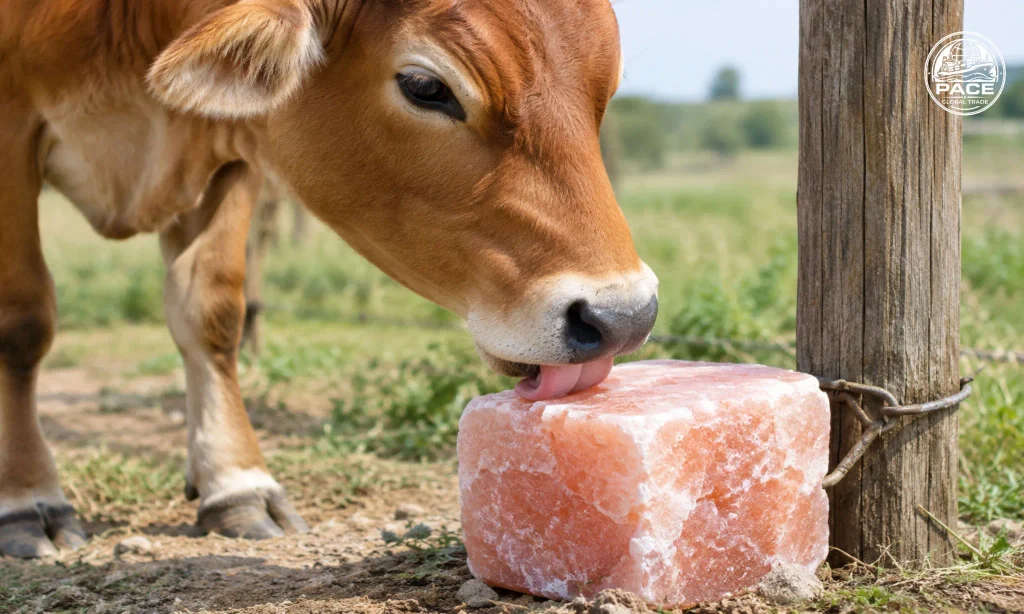
Cattle salt moves the most product in this whole space. Both beef and dairy herds need it on an ongoing basis. Dairy animals that are producing milk often need extra supply, since milk takes sodium away from the body.
In most cases, cows lick salt in the form of a thick block. It goes in a field feeder or in a stall holder. This kind of block holds up well. Rain does not break it down fast, and the animal can lick at its own pace. Some feed mills do it differently. They mix loose cattle salt into total mixed ration as part of a set recipe.
If you deal with farms that run more than one type of livestock, be careful. Certain mineral blocks for cattle include copper, and those levels can be harmful to sheep. Put the label on clearly. Also keep plain salt blocks available for flocks.
Salt for goats
The goat and salt relationship is a bit more delicate. Goats need salt just like other ruminants, but they’re more prone to urinary stones, especially males on high-grain diets. Plenty of clean water, a balanced ration, and steady salt access all help.
For most goat keepers, a small salt lick or some loose salt in a feeder does the job. If you sell salt for goats, go for smaller blocks of 1 kg to 2 kg. They’re easier to handle, and they move faster than large cattle blocks.
Loose salt vs salt block for animals
Which format is right comes down to the animal and how the buyer is set up.
| Loose salt | Salt block | |
| Best for | Feed blending, dosing horses in work | Pasture, stalls, general free access |
| Weather resistance | Low, absorbs moisture | High in dense blocks |
| Intake control | Owner controls | Animal controls |
| Typical buyer | Feed mills, stables | Farm stores, distributors |
| Handling | Bagged, easy to pour | Heavy, needs pallets |
A salt lick for animals is basically a block, ball, or brick meant to be licked. People also use different names for it depending on where they live.
If you have one shopper asking for a salt block for animals, and another asking for a salt lick product for animals, they often mean the same item.
Some searches use “animal licking salt” to find these products too. Because of that, it helps to list your items under several name options.
Packing, shipping and storage
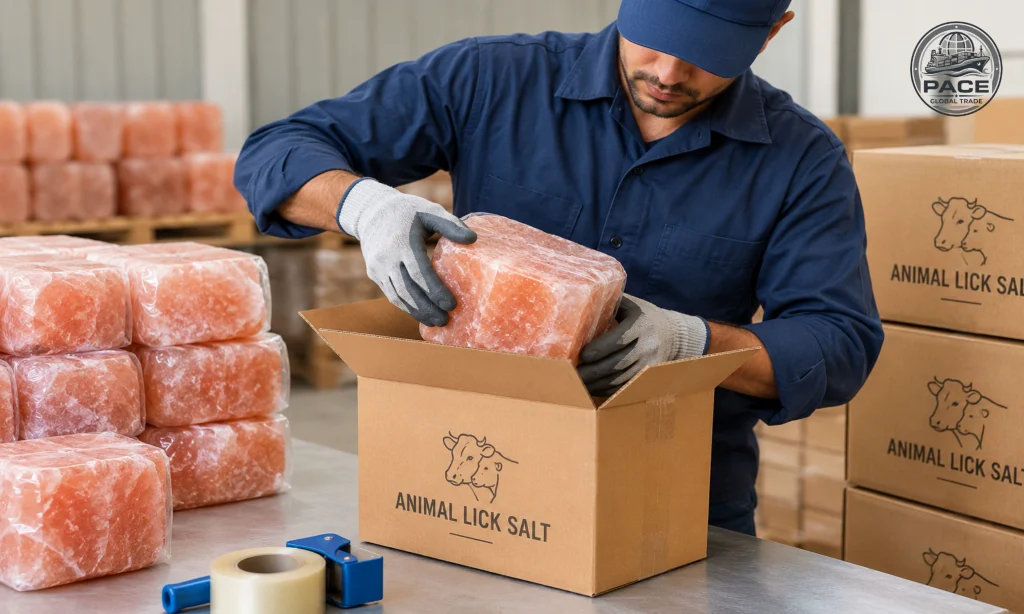
Salt is heavy, and it pulls in moisture, so packing decides whether your goods arrive in good shape. Blocks are usually shrink-wrapped on pallets or packed in woven polypropylene bags. A standard animal salt lick weighs between 2 kg and 3 kg (4 lbs to 6.5 lbs) for individual hanging blocks, though weights vary from 1.25 kg up to 13 kg+ depending on the shape and style. Containers should be dry and lined if the route is humid.
Once the shipment lands, store pallets off the floor in a dry warehouse. Salt doesn’t spoil, but damp storage causes caking and ruins the shape of the blocks.
Source animal salt from Pace Global Trade
Pace Global Trade is a Pakistan-based exporter supplying animal salt, in loose and block form, to distributors, feed mills and farm retailers. We match product type, size, and packing to your market, and we send samples and test reports before you commit to a full order.
To request a quote, tell us which products you need, the quantity, and the destination. Our team will reply with specifications and pricing.