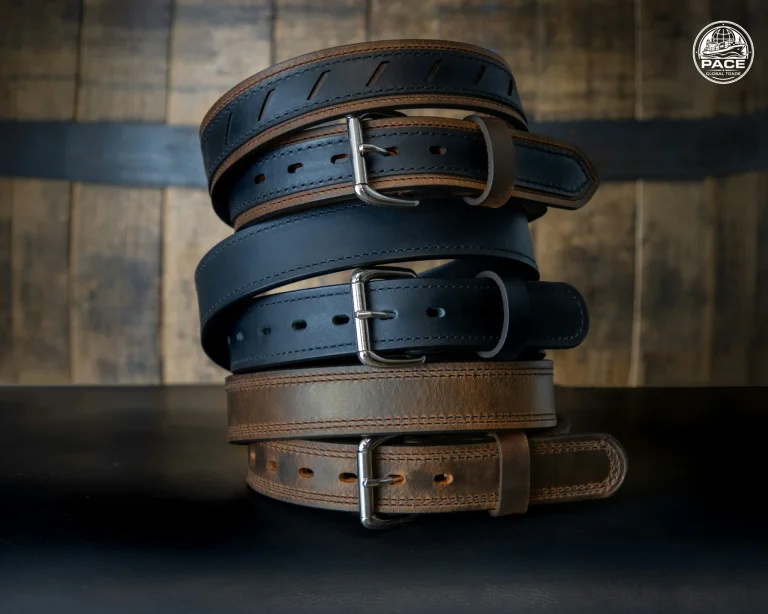
Leather Wallet
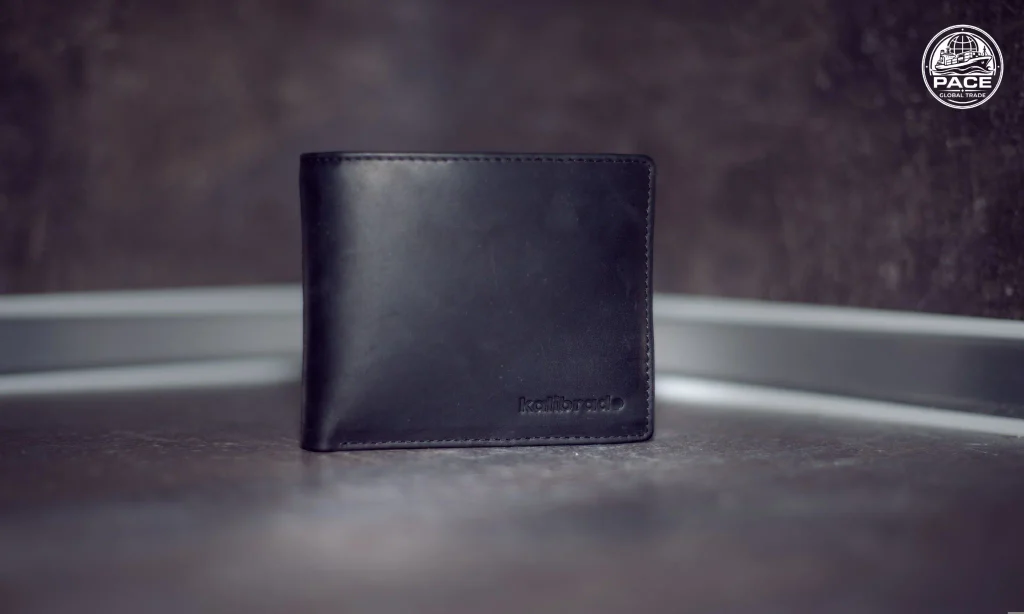
When we talk about leather wallet wholesale supply, we’re talking about buying these wallets – once they’ve been manufactured – as bulk orders.
This includes purchasing them from a manufacturer or distributor at tiered trade prices. Buyers are often retailers, brands, or corporate gifting teams who agree to purchase a certain number of each item (based on its colour/ design) and reap benefits such as discounted pricing on individual units.
It also ensures there’s consistency between batches ordered over time while allowing those looking to market their brand to put their logo into the product itself.
A leather wallet is also one of the easier products to hold in volume. There are no sizes to juggle, it packs flat, and it sells all year, with a noticeable bump before year-end gifting. That’s why gift shops, menswear stores, online sellers, and promotional companies tend to end up ordering the same handful of core styles.
Which wallet styles should a wholesale buyer stock?
Begin with four families: bifolds, card holders, women’s wallets, and a few specialty pieces. For a first order, put most of your units into bifolds and card holders, then fill in the rest in smaller quantities.
| Family | Core Styles | Typical Card Slots | Sells Best Through |
| Bifolds | Standard bifold, slim bifold | 6 to 8 | Menswear stores, gift retail |
| Card holders | Card case, folding card wallet, money clip | 3 to 6 | Online stores, corporate gifting |
| Women’s | Compact, slim, long, wristlet | 4 to 16 | Fashion boutiques, department stores |
| Specialty | Key wallet, cash wallet, designer tier | 2 to 6 | Add-on sales, premium retail |
Bifolds and billfolds
Any men’s range is built around the bifold leather wallet. A standard leather bifold wallet gives you six to eight card slots, two slip pockets, and a full-length note section. A slim bifold wallet omits the coin pocket and ID window to keep the fold thin.
Be aware that naming shifts from market to market. Older catalogues and some marketplaces still list these as “billfolds leather” or “leather bi fold wallet”, so it’s worth adding both spellings to your product data. On colour, lead with black and dark brown. You’ll rarely find a plain black wallet sitting unsold on the shelf.
Card holders and card cases
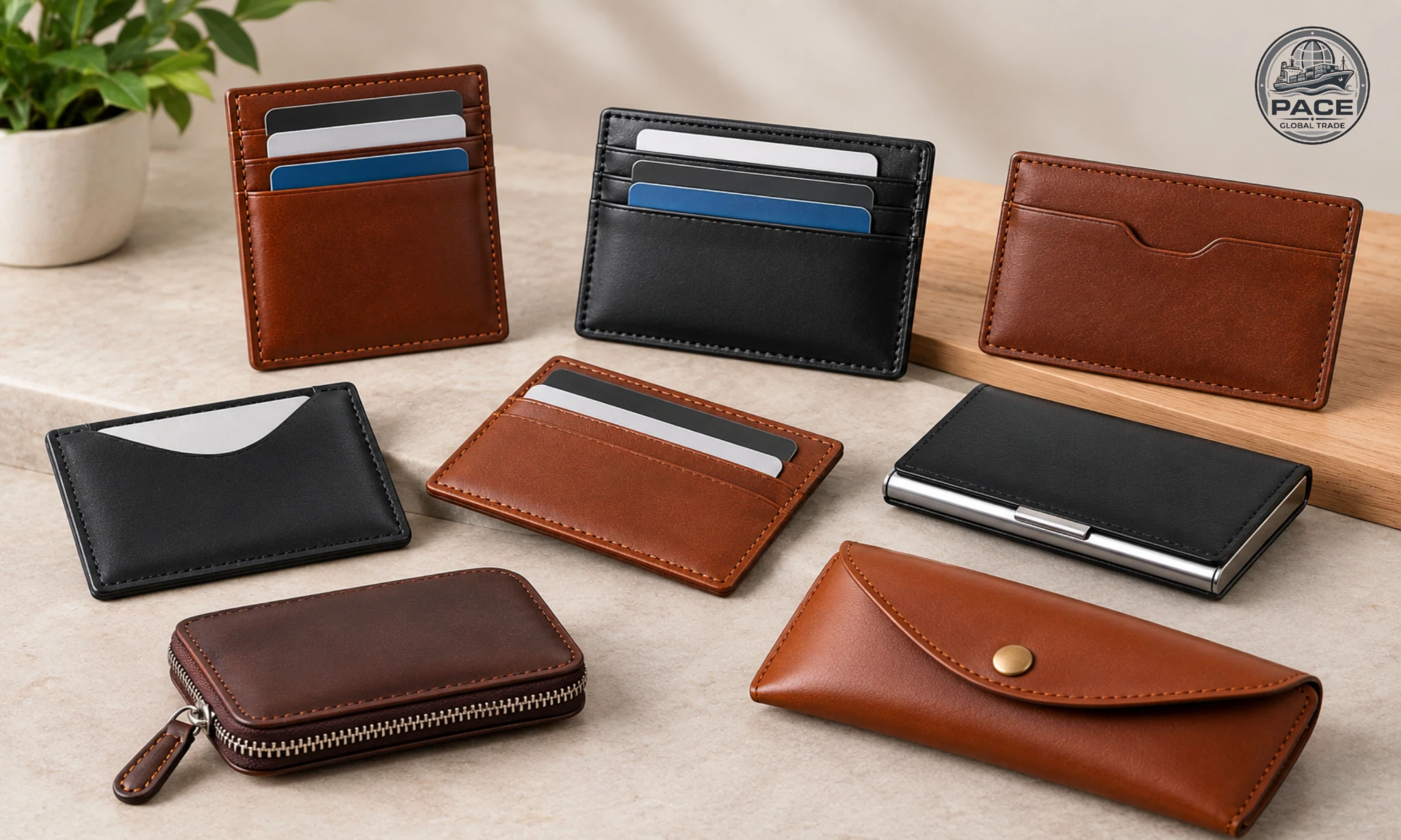
People carry fewer notes and coins than they used to, and card products have grown to fill that gap in the range. The terms overlap quite a bit, so spell them out in your catalogue:
A card case is a flat sleeve with three to five slots and no fold.
A credit card holder may be flat or folding, and often has a centre pocket for folded notes.
A credit card wallet is a folding piece designed around cards, with a small note section.
If you sell online, group all three under credit card wallets, because that’s the wider search term. A slim, full-grain leather card holder with painted edges can be positioned as a luxury card holder and priced accordingly. For men’s ranges, write your listing titles the way shoppers type them, such as “card holder men” followed by the colour.
Minimalist wallets fit in this family as well. A minimalist front pocket wallet takes four to six cards and a few folded notes, and it’s cut narrow enough to sit comfortably in a front pocket. Money clip wallets do much the same thing, using a spring or magnetic clip on the outside. For any slim leather wallet in this group, aim for under 8 mm thick when empty as your spec target.
Women’s wallets and wristlets
Women’s ranges call for more size variety than men’s. It helps to plan around three tiers:
Small: a small women’s wallet or mini wallet that slips into a crossbody bag, with four to six slots and a zip coin pocket.
Slim: slim wallets for women, made flat for cards and notes, without a bulky coin section.
Large: the long wallet, either zip-around or flap, with twelve or more slots and space for a phone. Online shoppers often search for this size as “wallet large women”.
Wristlets fall somewhere between a wallet and a bag. A wristlet wallet is a long wallet with a detachable strap. A wristlet purse is bigger and has room for keys and cosmetics too. Some buyers flip the words and ask for a wallet wristlet, so you’ll see both in enquiries. On category pages, “leather wallet women” is a common search phrase and makes a good collection label.
Specialty and premium pieces
Small add-on items raise your order value without adding much stock risk. A key wallet holds four to six keys on internal hooks, along with a card or two. A wallet with a key ring is a card holder or coin pouch with a split ring attached, and it’s popular for car keys. A cash wallet has a full-length note section and a few card slots. It still sells well for travel and in cash-heavy markets.
The top of the range belongs to the men’s designer wallet: full-grain or embossed leather, hand-painted edges, and a gift box. When retailers search for “high-end wallets men’s”, this is usually the tier they have in mind. They buy fewer units and work on a higher margin.
What leather grade is best for wholesale wallets?
If the wallet needs to last and age well, full-grain cowhide is the best grade. Top-grain is the practical pick for mid-priced ranges, where an even finish matters more than patina. Split and bonded leather are only suitable for promotional or entry-price orders.
| Grade | What It Is | Wear Over Time | Price Tier |
| Full-grain | Outer hide layer, natural grain left intact | Develops patina, strongest fibres | Premium |
| Top-grain | Outer layer, lightly sanded and finished | Even colour, resists marks, little patina | Mid |
| Split or corrected grain | Lower layer with an embossed, coated surface | Coating can crack at the fold | Entry |
| Bonded | Leather fibres pressed with a binder | Peels with daily use | Promotional |
Tanning plays a significant part here — vegetable-tanned leather gives you a firm leather that can be debossed with precision (and will darken with use), but chrome-tanned leather is softer, water-resistant, and available in a wider range of colours. Ask your leather supplier what tannage each leather style uses, as these properties affect both branding and wear.
On your specification sheet, include information about thickness — usually this is specified between 1.0- 1.4 mm thick for outer panel sections, with areas folded over being ‘skived’ to thinner gauges at fold/ seam lines.
Bonded nylon/polyester thread, equal stitch count, and back-tacked edges.
Painted & sanded edges (or turn & stitch). Raw cut edges will fray on thin leathers.
Leather/microfibre/woven fabrics as lining. Fabric linings tend to be the first thing to go, around the card slot mouths.
Hardware – zip/snap/ring from specified manufacturer (salt spray/rub test passed). RFID shield – Optional addition of foil layer between outer and lining (only for cards)
MOQ, price, and delivery? Please specify
Our MOQ is 100 pieces; it’s up to you whether you want color and design or different ones.
Note: These are just rough numbers. Stock designs take less time, & Customized Designs might take more than that.
| Term | Typical Range | What Moves It |
| MOQ, stock design | 50 to 100 pieces per colour | Leather already in the warehouse |
| MOQ, custom design | 200 to 300 pieces per colour | New cutting dies, dyed-to-order leather |
| Sampling | 7 to 14 days | Custom hardware or lining |
| Bulk production | 30 to 45 days | Order size, peak season |
| Deposit | 30% to 50% with order | Buyer history, order value |
Four things drive the unit price: leather grade, the number of panels and pockets, the branding method, and packaging. A zip-around long wallet can take three times the leather and labour of a card case, so compare quotes one style at a time.
Ask for a tiered price list with three or four quantity breaks. The gap between tiers tells you how much room the supplier has to move. It also shows you the point where a slightly larger order pays for itself.
Get the shipping term in writing. Under FOB, freight and import duty are the buyer’s responsibility. CIF covers freight and insurance to your port. With DDP, the supplier handles delivery and duty, and the quoted price is higher to reflect that. Because wallets are light and dense, air freight is often workable for urgent or small orders.
Can wholesale wallets carry your own brand?
Yes. Most manufacturers offer private label on stock designs and full OEM on custom patterns. With private label, your logo and packaging go on an existing style. With OEM, the wallet is built to your drawing, which pushes up both the minimum and the sampling time.
| Branding Method | Look | Works Best On | Setup |
| Blind Deboss | Pressed, tone-on-tone | Vegetable-tanned and firm leathers | One-time brass die |
| Foil Stamp | Gold, silver, or coloured | Smooth, finished leathers | One-time brass die |
| Laser Engraving | Fine, dark line | Natural and light colours | No die, file only |
| Metal Logo Plate | Raised badge | Women’s and designer lines | Custom mould |
For gifting / premium retail scenarios, you might be looking into various types of boxes – rigid 2-piece, magnetic gift box, cotton dust bags or kraft sleeves. So make sure that your partner agrees with you about barcode labels, care cards & carton marking at this stage.
Corporate buyers often want a second layer of personalisation, such as individual initials. Check whether the factory can do this in-house, and how much it adds to the lead time.
How do you check wallet quality before shipment?
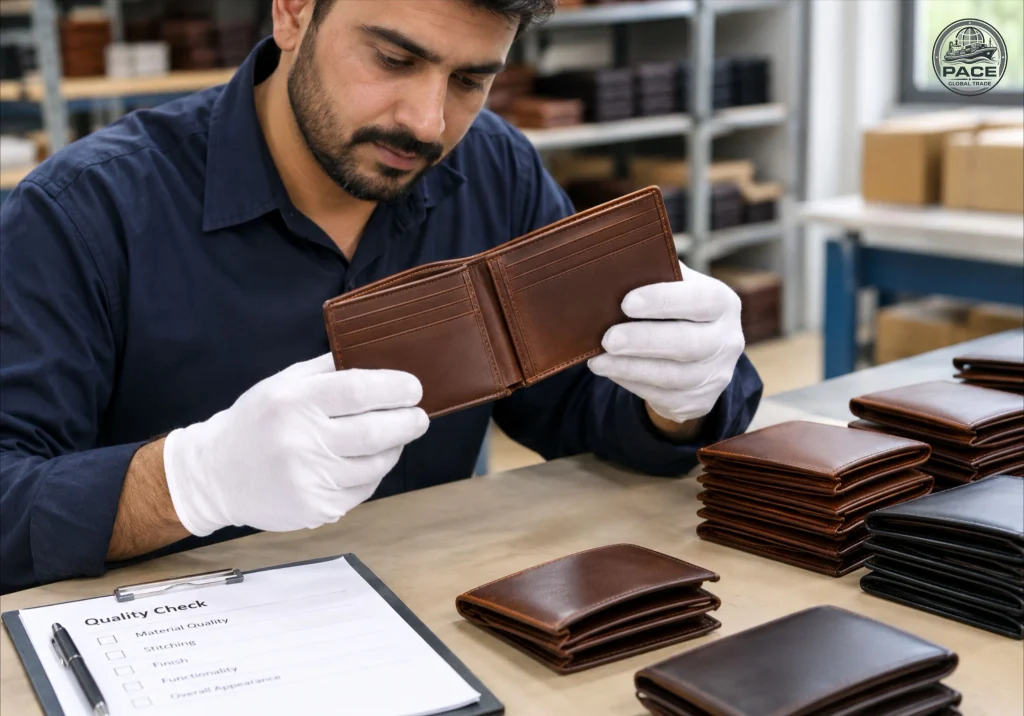
First approve a pre-production sample. Then inspect the finished goods against it, using a sampling plan both sides have agreed to. ISO 2859-1 is the usual basis, with an acceptance quality limit (AQL) written into the purchase order. Many buyers go with AQL 2.5 for major defects and 4.0 for minor ones.
On every inspected piece, check that:
- Leather matches the approved swatch in colour, grain, and thickness
- Outer panels are free of scars, loose grain, and dye patches
- Stitch lines are straight, with no skipped stitches or loose ends
- Edge paint is smooth and does not crack when the wallet is folded
- Card slots accept a standard ID-1 card (85.6 x 54 mm) without forcing
- Zips, snaps, and key rings work smoothly through repeated cycles
- Logo position, depth, and spelling match the approved artwork
- Dimensions are within the agreed tolerance, usually 2 to 3 mm
- Packaging, barcodes, and carton marks match the order
How do you choose a wholesale wallet supplier?
Pick the supplier who can deliver the same quality in bulk that they showed you in the sample. Price comes second. A cheap wallet that splits at the fold will cost you more in returns than it ever saved.
Confirm who makes the goods. A manufacturer controls cutting, stitching, and finishing. A trading company adds a margin but may let you mix styles at lower minimums.
Order paid samples in two or three styles. Then carry them for a month. Fold lines, edge paint, and card slots show their faults quickly.
Ask where the leather comes from. Tanneries audited by the Leather Working Group are a good sign of consistent, traceable hides.
Request recent test reports. They should cover the points listed in the quality section above.
Check capacity against your calendar. A factory that’s full from August to November won’t deliver a late gifting order on time.
Put the spec in the purchase order. Leather grade, thickness, thread, branding, packaging, AQL, and delivery terms all belong in writing.
Start with a trial order. Spread it across core styles and safe colours, then reorder the winners.
Ready to build a range? Ask [Your Company] for the current catalogue, tiered price list, and sample kit.
Conclusion
At Pace Global Trade, we provide reliable commercial supply of leather belts to wholesalers, retailers, distributors, and private-label brands. We focus on delivering quality products, competitive bulk pricing, and flexible customization options to meet our buyers’ requirements. Whether you need classic leather belts, formal styles, or custom designs, we ensure consistent quality, reliable order handling, and timely delivery. Contact us to discuss your bulk leather belt requirements and build a long-term supply partnership with us.